Corporate Event Debrief Template: Turn Evidence Into Actions
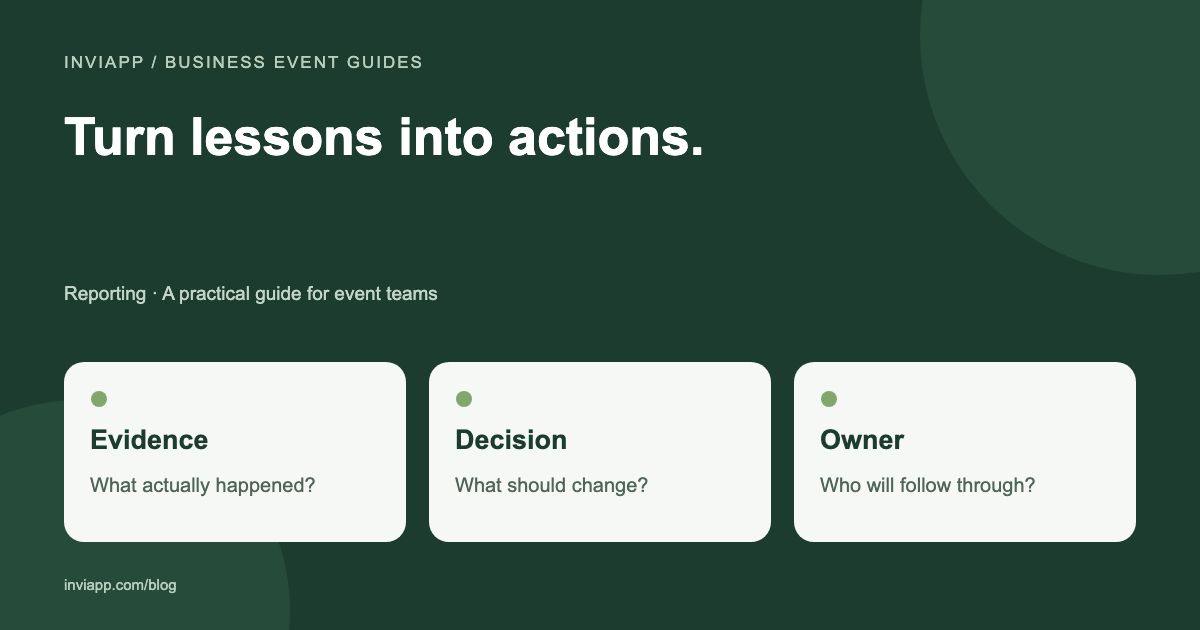
A useful corporate event debrief compares the intended outcome with the evidence, explains the main delivery differences and assigns the next actions. Record what should be repeated as well as what should change. Every agreed improvement needs an owner, a due date and a way to check completion.
In this guide
Prepare the evidence before the meeting
Gather the original event brief, budget, final running order, registration figures and participant feedback. Ask the people responsible for programme, operations and guest communications to bring a short account of what happened. Separate an observed fact from an interpretation or a proposed fix.
For example, “twelve people asked reception which room to use” is a more useful observation than “the signage was terrible.” The observation can lead to checking the actual arrival route, the event page and the wording of the final message. The interpretation alone may send the team towards the wrong solution.
Use a focused debrief agenda
| Time | Discussion | Output |
|---|---|---|
| 5 minutes | Restate the event’s purpose | One agreed outcome to evaluate. |
| 10 minutes | Review evidence and delivery | Facts, gaps and limitations. |
| 10 minutes | What worked and why? | Practices worth repeating. |
| 10 minutes | What should change? | A prioritised improvement list. |
| 10 minutes | Assign actions and close | Owners, dates and review method. |
The timings are illustrative. A larger or more complex event may need separate operational and programme reviews. The aim is a decision record, not a meeting that tries to replay every minute of the event.
Keep the measures distinct
Record invited people, confirmed registrations, confirmed companions and observed attendance separately. If attendance was not measured, say so. Do not turn the RSVP count into an attendance figure simply because it is the easiest number to find.
For evaluation results, show the question, response count and eligible recipient count. A high average from a small subset does not establish what everyone thought. Keep written feedback alongside ratings so that the team can understand the reasons behind the number.
Use the event registration metrics guide for definitions. Read the RSVP management guide if inconsistent guest totals caused difficulties before the event.
Turn observations into specific actions
“Improve communication” is too broad to assign or test. A more useful action is “add the entrance photo and written route to the final attendee message, with the guest lead checking it before the next invitation.” The second version names the change, owner and review point.
Prioritise actions by their likely effect and the risk of leaving the issue unresolved. Preserve an access or safety concern as an action even if it appeared in only one response. Frequency is not the only measure of importance.
Record what should stay the same. If the moderator’s briefing prevented overruns or the venue contact resolved an arrival problem well, document the practice and the conditions that made it work. A debrief should build repeatable strengths, not only catalogue mistakes.
Maintain a short action log
Download the editable debrief action log (CSV). It includes columns for observation, evidence, decision, owner, due date and success check. Replace the illustrative row with your own findings and keep the log with the event records.
Review open actions when planning the next event, not only when the next debrief takes place. An improvement that is first reopened after another event has already been missed.
Share the right summary with each audience
The leadership summary needs the outcome, main costs, relevant evidence and next decisions. Suppliers need specific feedback on the scope they delivered. Participants may appreciate a short explanation of what will change because of their feedback.
Keep named participant comments and individual support details out of broadly circulated summaries unless there is a clear, appropriate reason to include them. Summarise themes without pretending that the summary represents people who did not respond.
If the feedback process itself was weak, review the question wording before repeating it. Pew Research Center’s survey design guidance explains why wording and order can affect responses. The lesson is to improve the instrument as well as react to its results.
Frequently asked questions
When should the debrief happen?
Hold the main review while the delivery experience is still fresh and enough evidence is available. Add a later check for outcomes that take longer to observe rather than guessing them in the first meeting.
Who should attend?
Include the event owner and the people responsible for programme, operations and guests. Bring supplier or specialist input when it can resolve a specific question.
What is the most important output?
A clear record of what the evidence means and what will happen next. An action without an owner or review date is a suggestion, not a completed debrief decision.
Continue planning
- Post-Event Survey Questions That Lead to Useful Decisions
- Corporate Event Budget Template: A Worked Example
Plan your next event
Bring the invitation, practical details and guest responses together on a branded event page. Explore InviApp for business events or review Business pricing.